
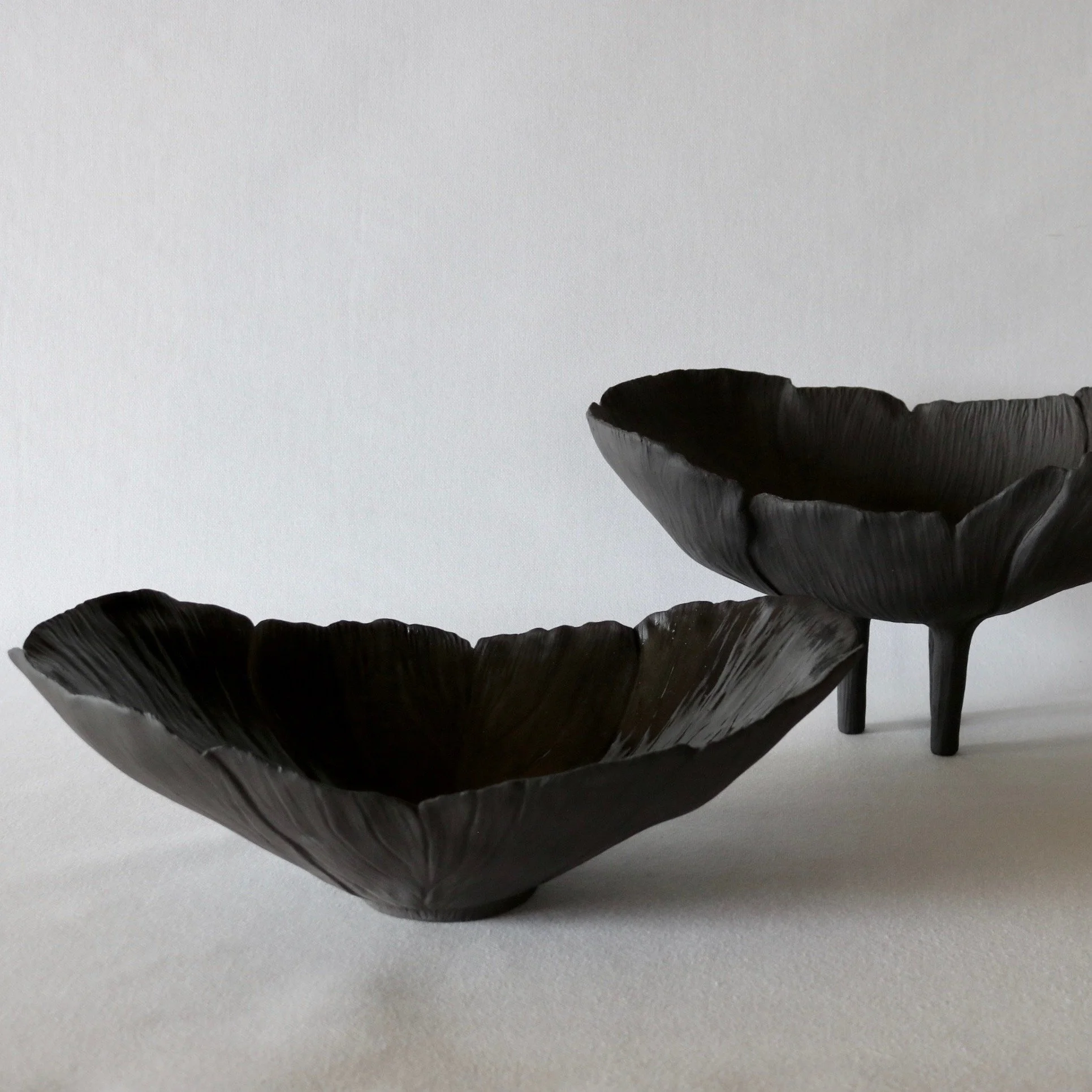
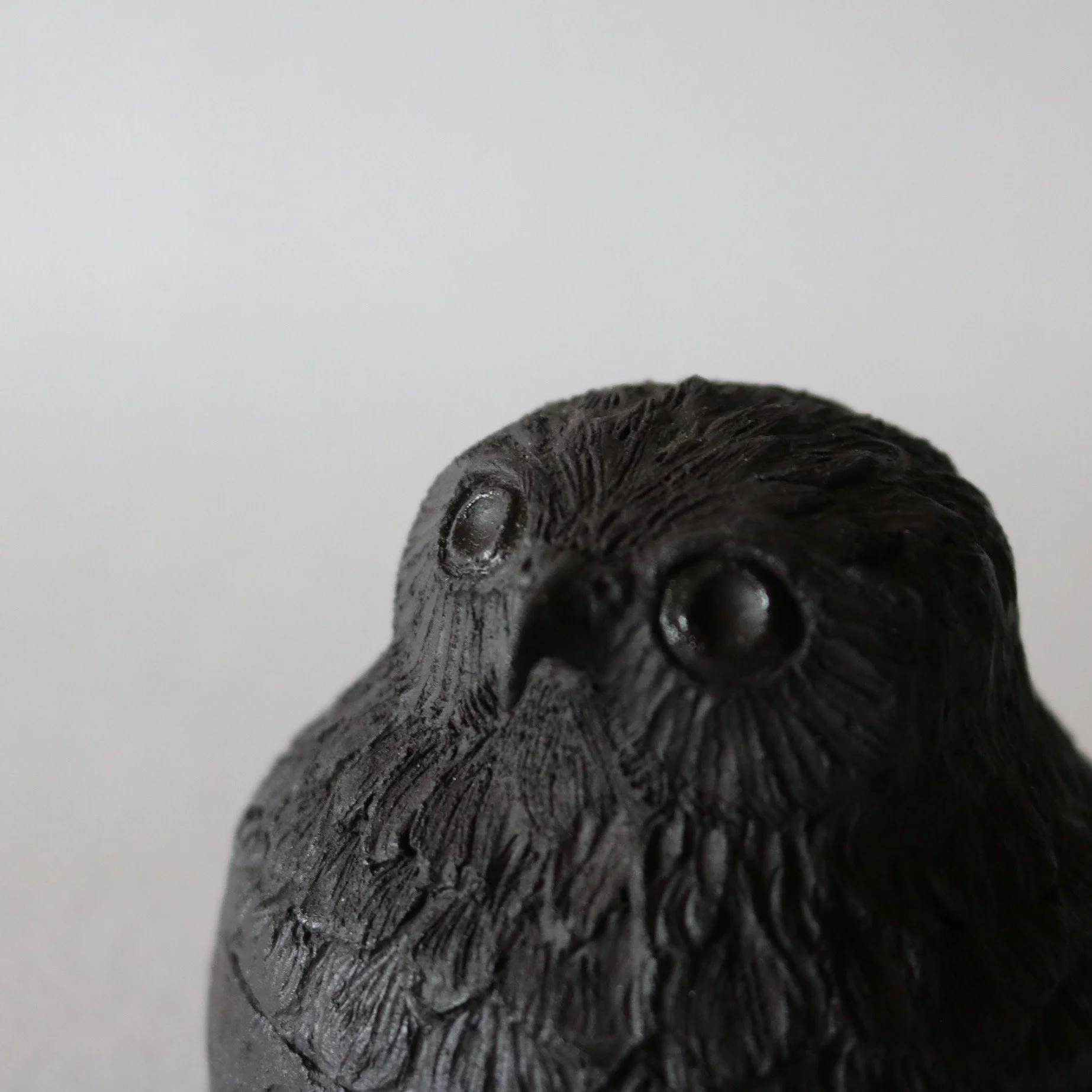
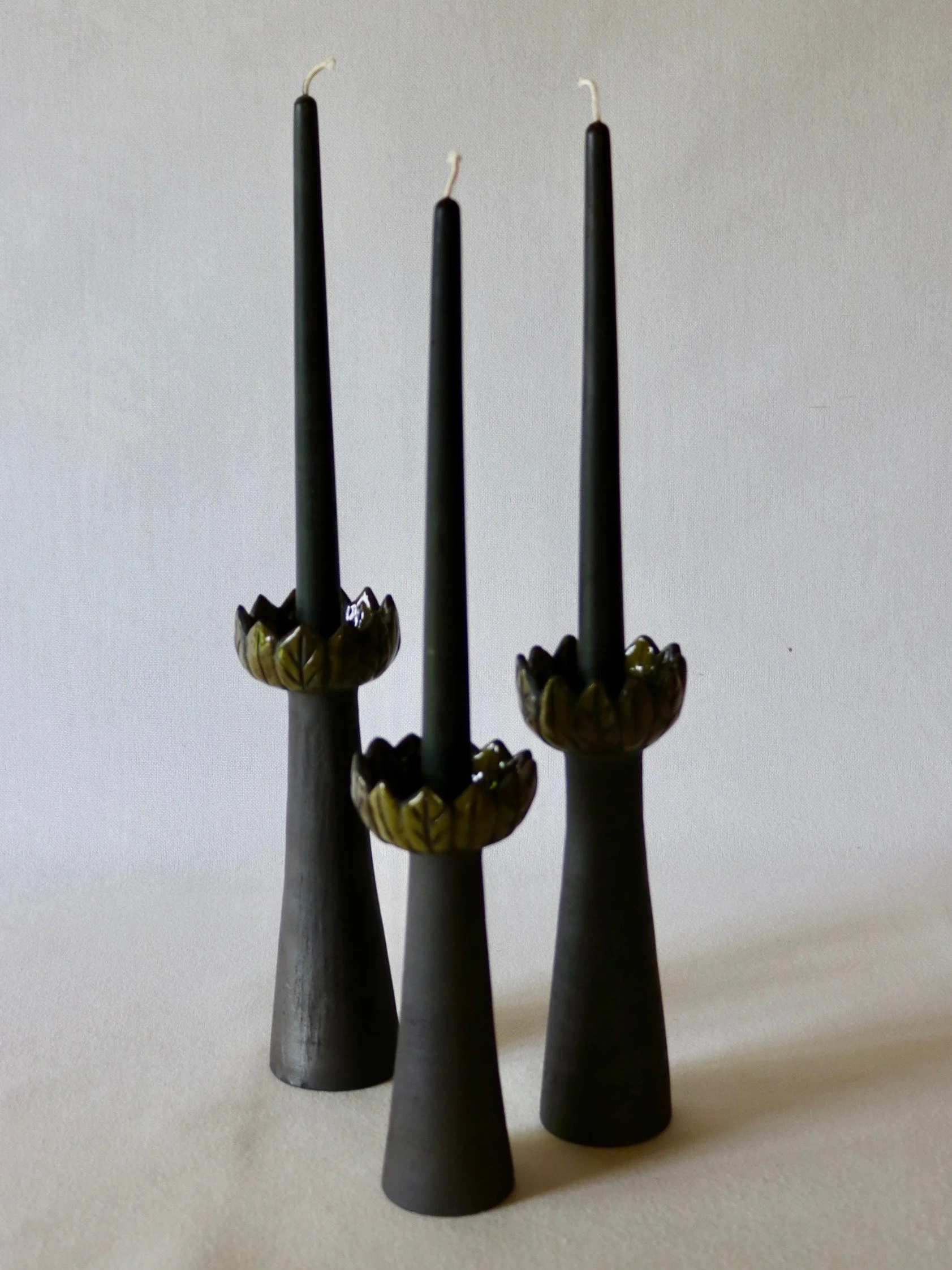
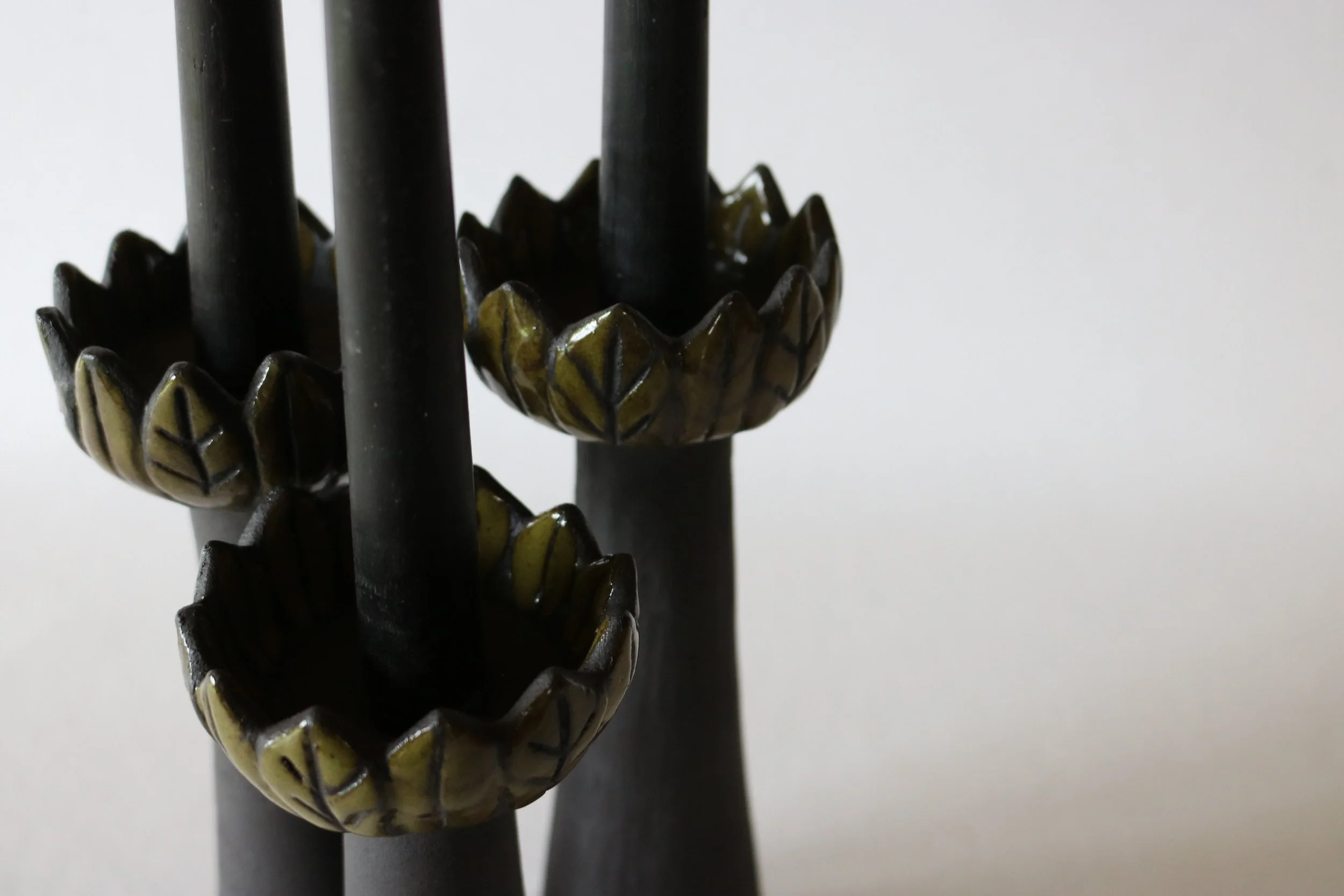
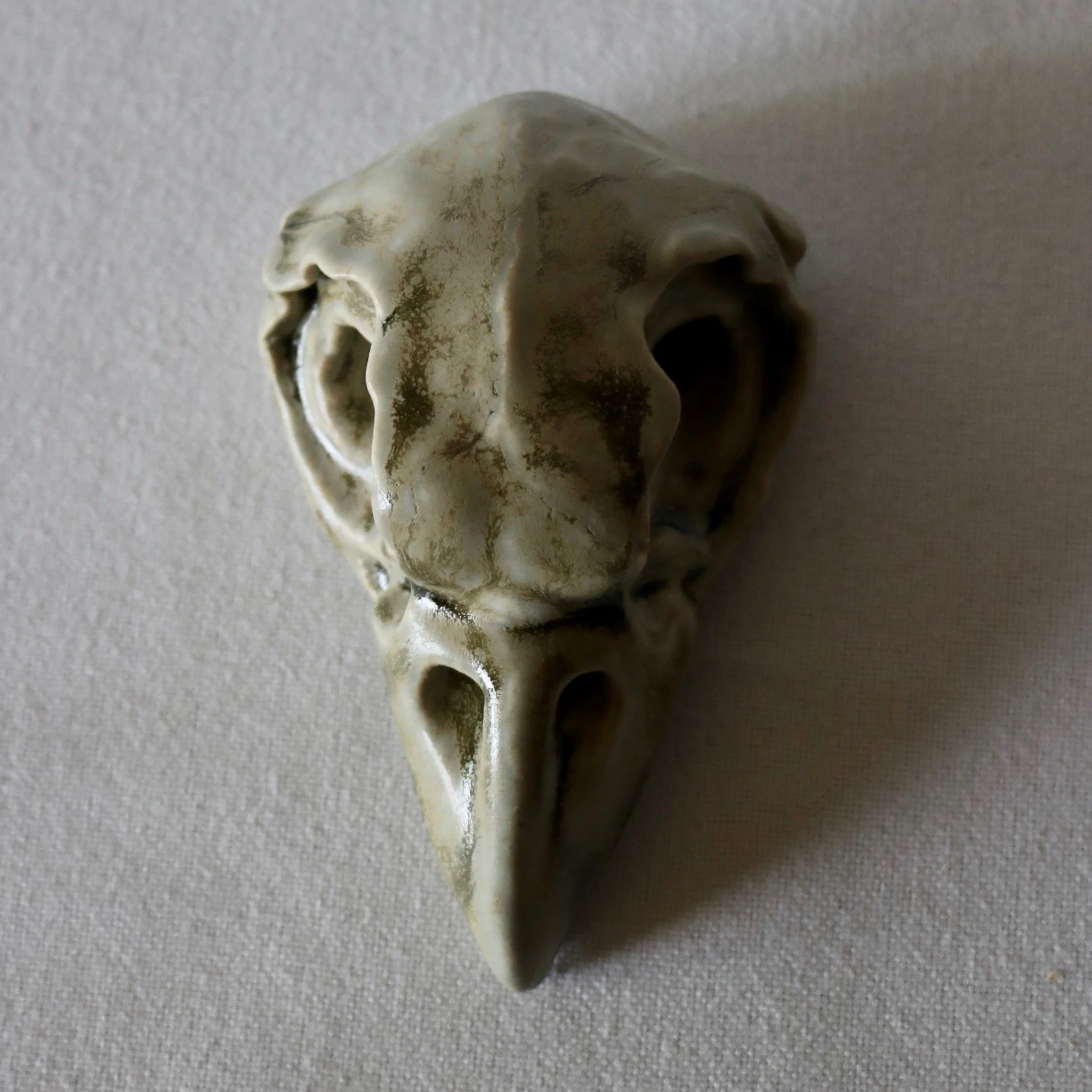
In the Night Garden 2025
The ideas for this little exhibition were initially conceived from a Māori whakataukī. ‘Mā te huruhuru ka rere te manu’ (Adorn the bird with feathers so it can fly) Suggesting if you give an individual what they need they can thrive and achieve their potential. I thought about my own creative journey and the knowledge people have generously shared with me over the last few years as I delve into the world of ceramics and this felt appropriate.
My past works around the Pekepeka-tou-roa (NZ long-tailed bat) which is also considered a manu or flying creature lead me to consider what else thrives in the night hours while most of us are asleep and it unlocked a magical world of nocturnal creatures and some of the magical night blooming flowers you will see here.
Moonflower
Due to it’s night-blooming nature, the moonflower is often seen as a symbol of mystery and magic. Its ethereal beauty, revealed only under the moonlight, evokes a sense of wonder and enchantment. A metaphor for transformation and new beginnings. Just as these flowers open up in the dark, they remind us that beauty and growth can emerge from even the darkest times. Moonflowers' delicate, fragrant blooms are often associated with romance and love. Their night- time blooming makes them a symbol of secret or hidden love, blossoming away from the world's prying eyes. Found in various myths and cultural practices around the world, many traditions revere the Moonflower for its mystical properties associating them with lunar deities and rituals. In some cultures, Moonflowers are believed to have protective qualities, warding off evil spirits and bringing good fortune. They are also thought to have medicinal properties
Evening Primrose.
Beyond its physical healing capabilities, evening primrose holds a special place in the spiritual world. The plant’s ability to bloom at night symbolises resilience, adaptability, and inner strength. It teaches us to find beauty in the darkness and to thrive even when the world seems asleep. This makes evening primrose a powerful symbol for those undergoing personal transformations or facing challenging times.
In the Victorian language of flowers, the primrose can symbolise young love. The flower has also been associated with fairies in European folklore, earning the nickname "fairy cups," with some believing that eating one would allow a person to see a fairy.
Pekapeka
Pekapeka-tou-roa (NZ Long tailed bat). Steeped in Māori mythology, this tiny and endangered bat holds a special place in the hearts of the people. Often seen as a symbol of guidance and protection. Legend has it that Pekapeka was once a beautiful maiden who lived in a lush forest. She was known for her kindness and deep connection to nature. One day, while exploring the woods, she came across a wounded bird. Without hesitation, she nursed it back to health. Grateful for her compassion, the bird revealed itself to be a powerful spirit. As a gift for her kindness, it transformed her into the Pekapeka, granting her the ability to fly and watch over the forest and its inhabitants at night.
Ruru
The ruru is considered a kaitiaki (guardian) and a messenger between the human and spirit worlds. Due to its ability to see in the dark, the ruru is associated with insight and the pursuit of knowledge (mātauranga). Some believe ancestral spirits can take the form of a ruru, known as Hine-ruru (the "owl woman"), to protect and advise the living. The common, mournful "ruru" call is a sign of good news. The high-pitched, piercing "que" or "yelp" call is an important forewarning of a bad event.